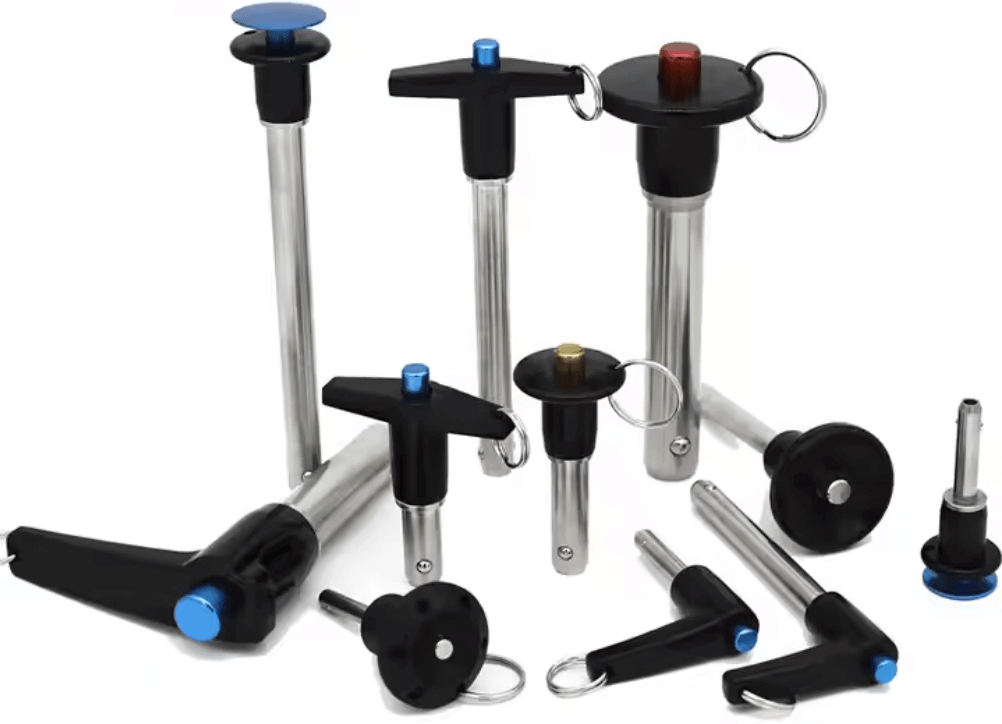
Quick release pins are mechanical fasteners designed for rapid, tool-free assembly and disassembly. They are essential components in various industries, from aerospace to manufacturing, offering secure and efficient solutions for applications requiring frequent part changes. Selecting the right quick release pin is crucial for ensuring optimal performance, safety, and longevity. This guide will walk you through the key factors to consider when choosing the perfect quick release pin for your needs.
Understanding Quick Release Pin Basics
Quick release pins consist of a pin shaft and a handle, employing spring-loaded balls or a locking mechanism to secure components. They’re designed for one-handed operation, streamlining processes and saving valuable time. Various types and handle styles cater to different applications, load requirements, and spatial constraints.
- Key Components:
- Pin Shaft: The main body of the pin, inserted through holes to secure parts.
- Handle: Used to actuate the locking mechanism and remove the pin. Common styles include T-handles, ring handles, and button handles.
- Locking Mechanism: Typically spring-loaded balls or a detent system that engages to prevent accidental removal.
- Types of Quick Release Pins:
- Ball Lock Pins: Feature spring-loaded balls that retract when the button is pressed.
- Push-Pull Pins: Lock and release with a simple push or pull.
- Detent Pins: Require forceful pulling for release.
- Double-Acting Pins: Release in either direction.
Factors to Consider When Selecting Quick Release Pins
Choosing the right quick release pin involves careful consideration of several factors:
Application Load and Environment
The load your quick release pin will bear is critical. Consider the following:
- Shear Strength: Ensure the pin’s shear strength exceeds the anticipated load.
- Tensile Strength: Evaluate the pin’s resistance to pulling forces.
- Operating Environment: Factors like temperature, humidity, and exposure to corrosive substances will influence material selection.
Material Selection and Durability
The material of the quick release pin directly impacts its durability and resistance to wear and corrosion.
- Stainless Steel: Offers excellent corrosion resistance and strength, suitable for harsh environments.
- Alloy Steel: Provides high strength and is often used in demanding applications.
- Considerations:
- The operating environment’s impact on material degradation.
- The potential for wear and tear based on the frequency of use.
Handle Style and Ergonomics
The handle style affects ease of use and the pin’s suitability for specific applications.
- T-Handles: Provide a comfortable grip for frequent use.
- Ring Handles: Compact and suitable for confined spaces.
- Button Handles: Easy to operate and often used in ball lock pins.
- Ergonomics: Prioritize handle designs that promote ease of operation, especially in repetitive tasks.
Locking Mechanism and Safety
The locking mechanism is critical for secure fastening and preventing accidental release.
- Positive Locking: Ensures the pin remains locked until deliberately released.
- Detent Mechanisms: Offer a degree of resistance against unintentional removal.
- Safety Standards: Adhere to industry standards and regulations, particularly in safety-critical applications.
Size and Dimensions
The pin’s size and dimensions must align with the application’s requirements.
- Pin Diameter: Determine the appropriate diameter based on the hole size and load requirements.
- Grip Length: Ensure the grip length accommodates the thickness of the components being joined.
- Overall Length: Consider the space available for pin insertion and removal.
Applications of Quick Release Pins
Quick release pins are versatile fasteners used across various industries:
- Aerospace: Used in aircraft maintenance and assembly.
- Manufacturing: Ideal for tooling fixtures and equipment adjustment.
- Transportation: Used in trailers, trucks, and other vehicles.
- Construction: Employed in scaffolding and temporary structures.
- Farm Equipment: Facilitate quick changes and adjustments in agricultural machinery.
Conclusion
Choosing the right quick release pin is a critical decision that impacts the efficiency, safety, and longevity of your applications. By considering factors like load, material, handle style, and locking mechanism, you can select the perfect pin to meet your specific needs. Careful consideration of these elements ensures secure, reliable, and tool-free assembly and disassembly.